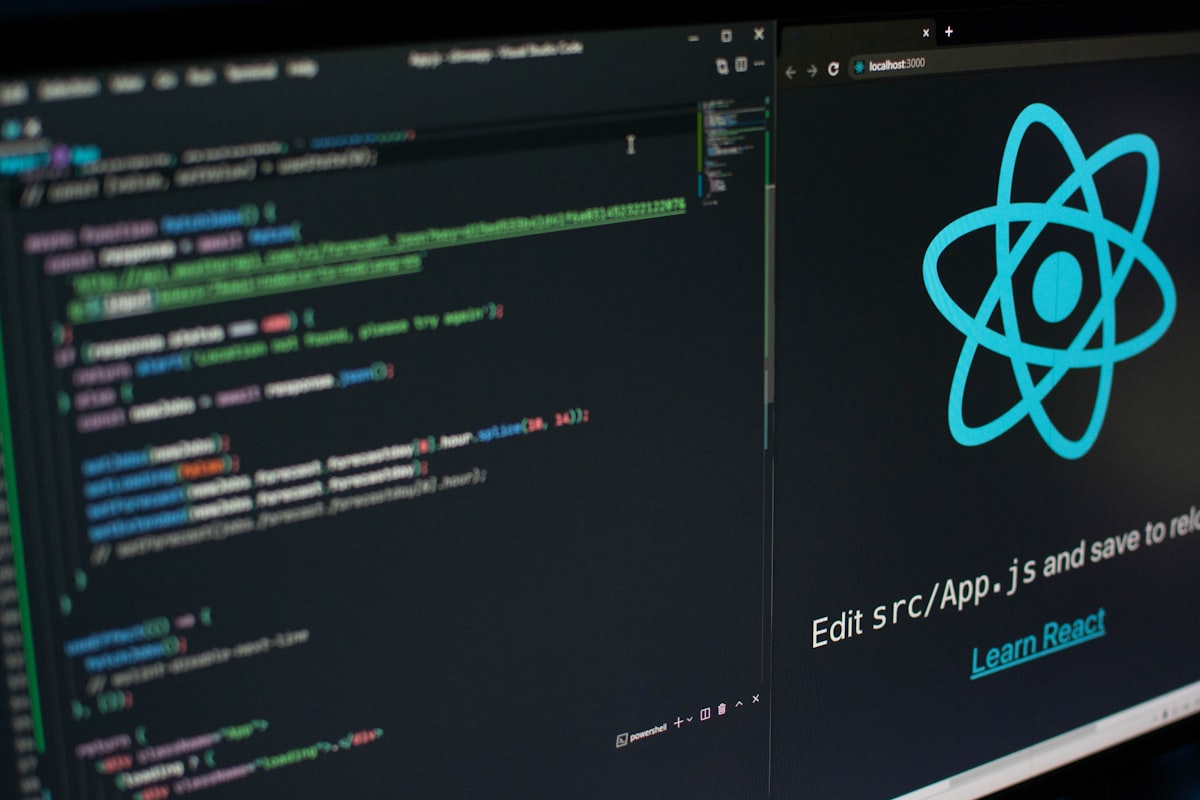
In 2026, the performance gap between React Native and native apps (Swift/Kotlin) has officially closed. With the full rollout of the New Architecture, React Native has moved from a “bridge-based” system to a “direct-communication” system. At NeedleCode, we’ve pioneered the use of these features to build mobile experiences that are as smooth as they are scalable.
1. The End of the Bridge: JSI and TurboModules
The old “Bridge” was asynchronous and forced JSON serialization, creating a bottleneck.
- The Tech: We implement JSI (JavaScript Interface).
- The Power: JSI allows the JavaScript engine (Hermes) to hold a direct reference to C++ native objects.
- TurboModules: These are lazy-loaded native modules that use JSI for synchronous communication.
- Impact: Your app only loads the “Camera” or “GPS” code when it’s actually needed, leading to 50% faster startup times.
2. Fabric: Concurrent Rendering for Mobile
Fabric is the new rendering system that brings the power of React 18/19 to mobile.
- Synchronous UI Updates: Fabric allows for synchronous rendering, eliminating the “jumpiness” seen in old apps when scrolling through complex lists.
- Concurrent Mode: It calculates UI updates off the main thread, ensuring that a heavy data fetch never blocks your animations.
- Result: A perfectly smooth 120Hz user experience, even on mid-range Android devices.
// Example: Using concurrent features in a 2026 React Native app
import { useTransition } from 'react';

function ProductSearch() {
  const [isPending, startTransition] = useTransition();

  const handleSearch = (query) => {
    startTransition(() => {
      // This heavy filtering happens in the background
      filterLargeProductList(query);
    });
  };

  return <SearchInput onChange={handleSearch} loading={isPending} />;
}
3. Static Hermes: Compiled Performance for JS
One of the biggest 2026 breakthroughs is Static Hermes.
- How it works: Instead of interpreting JavaScript at runtime, Static Hermes pre-compiles your TypeScript/JavaScript into optimized machine code during the build phase.
- Performance: This provides a massive boost to computationally heavy tasks like data processing, encryption, or physics simulations, making JS performance comparable to C++.
4. Seamless Interop with Native Graphics (Skia)
We utilize React Native Skia to draw high-end graphics and animations.
- The Advantage: Skia is the same 2D engine used by Google Chrome.
- Action: We build custom charts, complex gradients, and fluid UI components that run at native speed without ever touching the main JavaScript thread.
5. Over-the-Air (OTA) Resilience: Expo EAS
In the startup world, bugs happen.
- NeedleCode Standard: We use Expo EAS Update to push critical bug fixes or minor UI tweaks directly to your users’ devices in seconds.
- Benefit: You can iterate daily based on real-time feedback without waiting 48 hours for App Store approval.
Why Choose NeedleCode for Your Mobile App?
We are architects of the New Architecture. Our team doesn’t just “write React”; we understand the C++ layer and the Hermes engine internals. We focus on zero-latency interactions, battery efficiency, and limitless scalability.
Conclusion: Build Once, Run Everywhere, Zero Compromise
React Native in 2026 is no longer a compromise. It is a high-performance, native-speed platform that happens to use the world’s most popular programming language. By embracing Fabric, TurboModules, and Static Hermes, we build mobile experiences that set the industry standard.
Ready to build a high-performance mobile app?